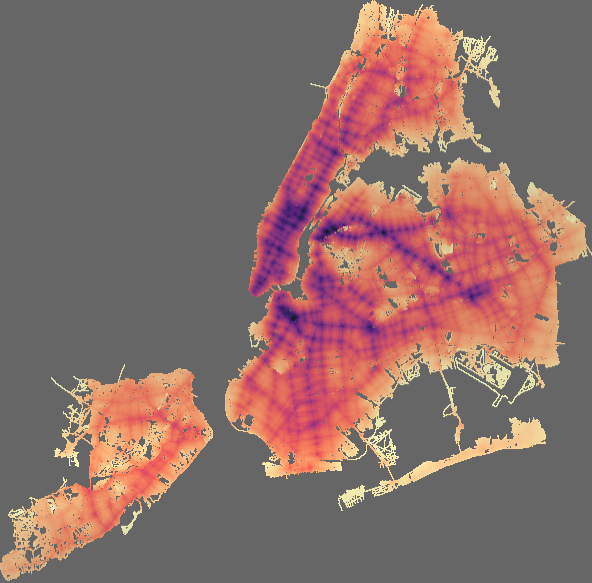
The Aaron E. Henry Community Health Services Center operates demand response transit service in the Mississippi Delta region with 45 vehicles. The city of Gadsden, Alabama runs buses on four fixed routes, but not on weekends or after 3 P.M. The Chicago Transit Authority runs some of its heavy rail lines with no worse than 15-minute frequency, all day and night, on weekdays, weekends, and holidays. All three agencies operate what the federal government characterizes as public transit service, but they differ greatly in what roles they can play in the lives of the people that they serve.
A political leader or transit advocate in Gadsden, who wants public transit to fulfill more of the needs of the city’s residents, could take cues from places like Chicago where transit has a larger role. Obviously this person will need to press for increased funding, but if they get it, spending it wisely presents its own challenges. They run the risk of fixating on the conspicuous elements of transit service, like vehicle types and infrastructure, rather than fundamental ones: what the transit service in these places aims to accomplish and what planning methodologies further these aims. A public transit hierarchy of needs could focus thought and discussion on these meaningful elements by guiding transit stakeholders through the process of understanding what their region’s transit is accomplishing now, what it could do next to meet additional needs, and what shifts in mindset would allow it to get there.
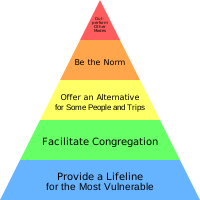
Each level of the hierarchy presents a mission, with associated planning and service assessment choices. Transit service does not just hit a specific level, but accomplishes the level’s mission, and those of the levels below, with some degree of success. Hypothetically, service can rise to any level anywhere, though demographic and land use patterns influence the cost.
[Read More]